Sunday, January 1, 2023

Review: "A Place for Us" by Brandon J. Wolf

Cover image of the book "A Place for Us"

A Place for Us by Brandon J. Wolf
Scheduled for release 6 June 2023 via Little A

★★★★


Wolf survived the Orlando nightclub shooting, but that's not where he starts the story: he opens the book in his childhood in Oregon, when he lost his mother at a young age. This would be a devastating and formative loss for almost any child, but for Wolf it came with an extra complication—he already felt other, and without his mother by his side it was a long, long time before he could truly feel that he had people in his corner, people who understood him.

It's roughly a third of the book in before Pulse is even mentioned, and that's intentional: the shooting was the catalyst for this book and a catalyst in Wolf's life, but it was representative of a great deal more than that. Wolf describes growing up knowing exactly how many other students in his school were Black, knowing that his white family wouldn't stand up against racial or homophobic slurs, and constantly needing to watch his back, because his school and his town were not safe places to be if you were different. (That Pulse was something representative of a safe space—and of chosen family—is not a new spin, and if you've read a think piece or two this won't come as new information. But Wolf doesn't belabour the point about Pulse here, focusing instead on the people who were his chosen family.)

I'm grateful that the book focuses less on what happened and who committed this violence and more on who and what were lost, because Wolf is right: the media conversation so quickly turns to othering and blame. Thoughts and prayers. The human stories get lost, and nothing changes. That said, on the subject of the media, not long before I read this (in December 2022), the New York Times reported that gun violence had become the leading cause of death for children in the U.S., surpassing motor vehicle crashes, cancer, and other causes for the first time. The Orlando victims didn't include children, but this book is still incredibly timely. Shootings have gone up, not down, and there have been so many mass murders that they blur together even when I look them up individually. (Tell me there is a systemic problem without telling me there is a systemic problem.)

This hovers somewhere between three and four stars for me. The story and timeline felt clearest in the first two thirds, and the writing sometimes felt unnecessarily dramatic—the material is dramatic enough not to need the flourishes. But I'm also reading this thinking why is this the first memoir about this that I've seen? Surely there have been others—it's been more than six years. But the people affected by this shooting tended to be in doubly marginalised groups (in many cases queer and Latinx; Wolf is queer and Black), and those aren't voices that are often amplified in the US. It's appalling that there is even a mass-shooting literature, but...there is, and Wolf's is a necessary voice in that literature.

Thanks to the author and publisher for providing a free review copy through NetGalley.

Saturday, December 31, 2022

Review: "I'm Glad My Mom Died" by Jennette McCurdy


Cover image of I'm Glad My Mom Died

I'm Glad My Mom Died by Jennette McCurdy
Published August 2022 via Simon & Schuster
★★★★


Sometimes all you can say is oof. McCurdy had a childhood that looked shiny on the outside—child actress, successful, a mother who devoted her time and energy to her kids, and in particular to her daughter, to encourage success. Her mother was her best friend, her raison d'être.

But just behind the veneer was something else: her mother's hoarding problem, which meant that the family could no longer sleep in their beds, but rather on folding mats in the living room. Her mother's insistence on dressing her kids, showering her kids, and performing some form of pelvic/chest exams on her kids well into their teens. The phrase if Momma ain't happy, ain't nobody happy comes to mind—but in this case, that meant if Momma ain't happy, there will be hysterics and threats of violence until everyone gives in. McCurdy knew she couldn't so much as try a new ice cream flavour without her mother getting upset, because trying something new was a sign that she was growing up, and her mother wasn't ready for that. Now now, not ever.

Consequently, McCurdy describes a childhood in which she was never really allowed to be a child. Introduced to calorie restriction as a young child—a way to stay small, to be more desirable for roles on children's television—she struggled with eating disorders for years, with her mother's approval. (Better to stay sick if that means staying skinny, after all.) A father who was physically present but checked out enough to misspell McCurdy's name on her eighth birthday card. A career in which she was valued for her ability to cry on cue—and in which the adults responsible for casting, once they'd seen that she could do so, might demand that she do it again just for their entertainment.

I cannot say that the book makes me think well of Hollywood.

All together, though, it's very well done—tightly edited, with scenes chosen to make their points. As often as not, McCurdy describes the leadup to an audition but not the audition itself, or rehearsing (under her mother's hyper-critical eye) for a scene but not the filming itself—because acting was a byproduct of the rest of her life, I guess. Never her own goal, and not where the real stories are. There's a lot still left unsaid: I imagine there's a lot more behind McCurdy's mother's story, for example, though McCurdy herself might not know what (or might for a variety of reasons have opted to leave that out). But jeepers creepers. I'm glad McCurdy has found a way to get herself on a healthier, and more fitting for who she is, track.

Wednesday, December 28, 2022

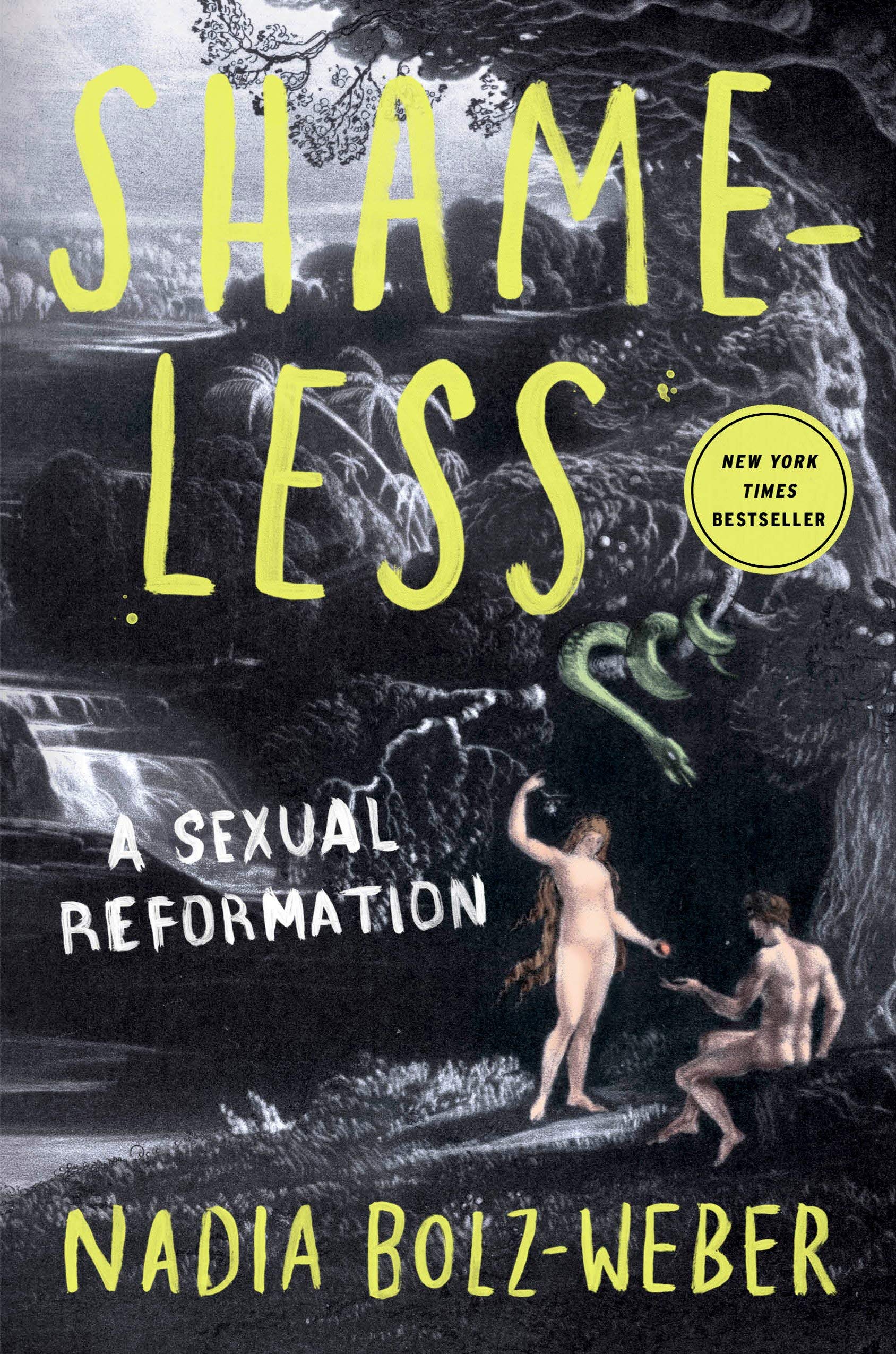
Review: "Shameless" by Nadia Bolz-Weber


Cover image of Shameless

Shameless by Nadia Bolz-Weber
Published January 2019 via Convergent Books
★★★★


So—I'm not the intended audience for this book. The intended audience grew up in a fairly conservative church, probably, and received sex ed along the lines of "if you have sex outside of marriage, you'll catch an STD and die, and then you'll go to hell for it." I grew up in an areligious family, and the sex ed I got was more along the lines of "if you have sex, use a condom because you don't want to be a teenage parent or have to deal with an STD." (Well. Mostly. I had a very strange amalgamation of sex ed classes, but that was the upshot.)

But...having read a fair amount, recently, about the ways in which so many churches teach people (but especially women) to distrust their own bodies and own experiences, it was something of a relief to read an antidote to that. This book does have a specific audience, I think: people who grew up with a specific type of church teaching around sex and "purity," yes, but also people who have stepped away from that sort of church/teaching enough to be able to say "hang it all, I'm keeping only the parts that work for me." It won't sit well with everyone, but it feels like a very necessary different—and far more compassionate—perspective.

Alas, though, I am now out of Nadia Bolz-Weber books to read, because I still don't have a copy of Salvation on the Small Screen. But it's been more than three years since her last book, so surely a new one is due soon...?

Sunday, December 18, 2022

Review: "Three Ordinary Girls" by Tim Brady


Cover of Three Ordinary Girls

Three Ordinary Girls by Tim Brady
Published February 2021 via Citadel Press
★★★


For all that I've heard about the strength of the Dutch resistance, it strikes me that I've read very few stories of that resistance: real people, who in peacetime would likely live ordinary lives with very little fanfare, doing whatever they could to slow the advance of the Nazis. It also feels very on point to read this sort of thing now, when my news sources are full of stories about Ukrainian teachers and students and farmers who have been catapulted into new roles they never wanted—ones in which they fashion molotov cocktails and teach field first aid and learn to fire weapons.

The writing is fairly flat, possibly in part because no matter how much research Brady did for this (and I have no idea what sorts of connections he might have, if any, to the Netherlands or the Dutch resistance), this was never going to be his story—it's all somebody else's story, somebody else's dialogue remembered years and years later. In some places the story must have been reconstructed third- or fourth-hand, because (not really a spoiler) not all first-hand sources were alive to tell the tale.

Much of this, though, is a reminder of how scrappy war can get: how plans fall apart, how a few people with more bravery than common sense can grow into a resistance cell with little direction or oversight, how sometimes a rescue mission can turn terribly deadly...and then be forgotten to time, because there is so much horror in war that the individual moments stop standing out. And then how murky ethics can get, and how quickly heroism can get muddied by politics.

All three women have Wikipedia profiles, though if you're going to read this book—or another longer-form work about them—I'd recommend holding off on the Wikipedia rabbit hole.

Sunday, December 11, 2022

Review: "Spindled" by Shanna Swendson


Cover of Spindled

Spindled by Shanna Swendson
Published April 2020
★★★★


Delightful, playful turn to YA here—some of it requires a bit of suspension of disbelief, but then...fairy tales. The one thing that disappointed was the romance: I know I'm an anomaly here in that I'm always whingeing about the amount of space taken up by it in YA fiction, but this could have been such a strong platonic-friendship story if it weren't for the emphasis on hearts and flowers. Two girls against the world! Still, there's room in the ending for a sequel, so I can hold out some hope of that friendship story.

Thursday, December 1, 2022

Reread: "Thin Ice" by Marsha Qualey

Cover image of Thin Ice

Thin Ice by Marsha Qualey
Originally read sometime around 2000
★★★★

A childhood reread. Funny what things stick with you (Arden's pompadour, the origin of her name, the bowling shirts, the time Arden calls the cops) and what doesn't (Jean and Kady, Hannah, Arden's seventeenth-birthday kiss). I love so many things about this pre-cellphone, barely-into-the-Internet-age type of YA (though there are also some glaring gaps, such as the way the characters are all white and straight and able-bodied and basically financially sound), and rereading now makes me think that this, like Ellen Emerson White, has been inadvertently quite influential on my own writing. Makes me want to go through other old childhood favorites and see what does, and doesn't, stand the test of time.

Saturday, November 19, 2022

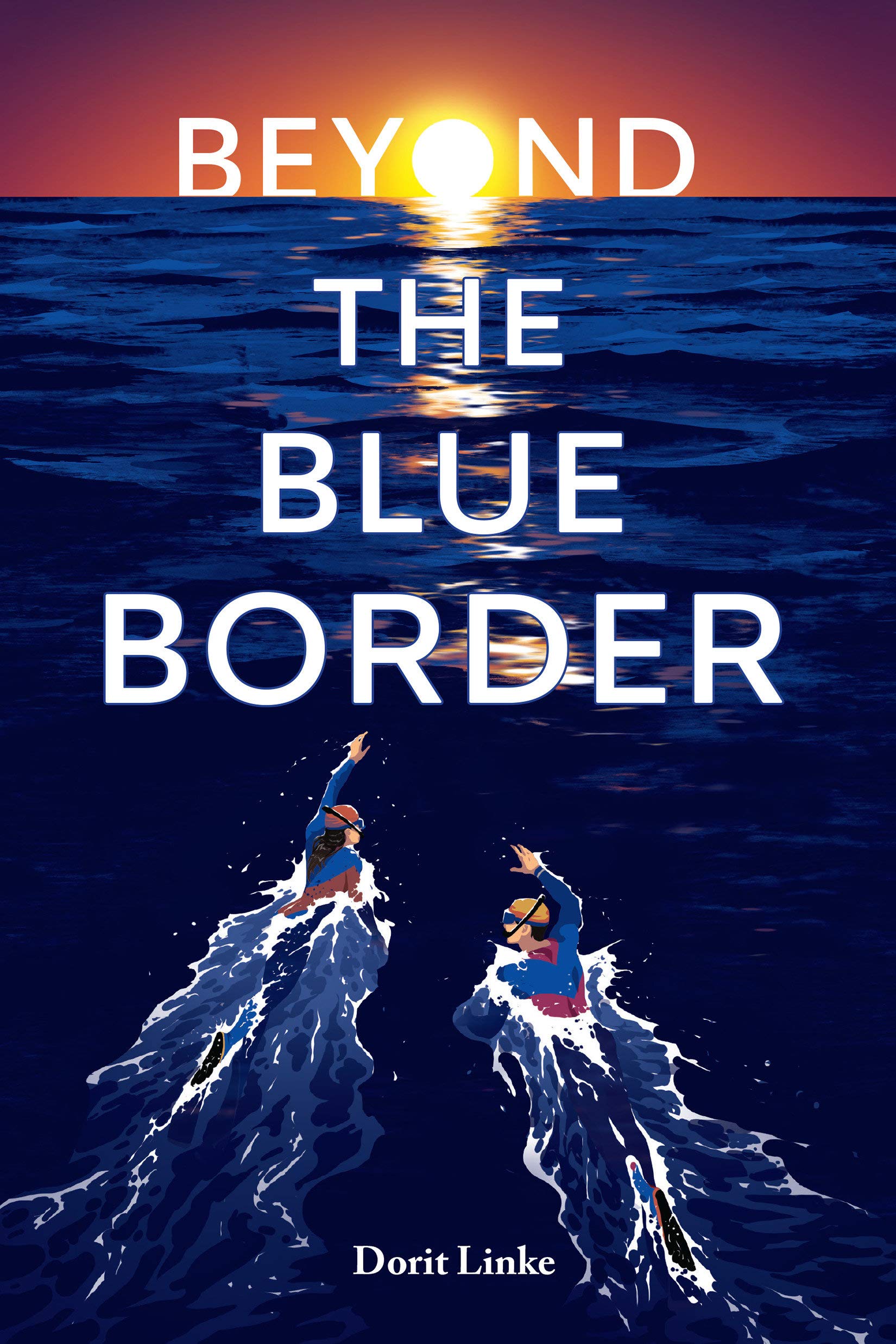
Review: "Beyond the Blue Border" by Dorit Linke


Cover of Beyond the Blue Border

Beyond the Blue Border by Dorit Linke
Translated by Elisabeth Lauffer
English edition published May 2021 via Charlesbridge Teen
★★★★


East Germany: Hanna isn't always good at flying under the radar, but she does basically what she's told. She is, if not a star swimmer, an extremely strong one; her marks are well enough that she expects to take the Abitur and go on to university; she knows that East Germany isn't all that the authorities say it is, but it's still where she lives and where she envisions her future.

Then all that changes—and Hanna can no longer see a confined-but-promising future. Instead, her future is grey, as is that of her best friend; their third wheel is long gone. And so it comes to pass that Hanna and Andreas pour themselves into the Baltic Sea to attempt the impossible: swimming to freedom.

The book is told in back-and-forth narration, then and now, until almost the very end. While I definitely found the swim more engaging—the odds are not in their favour, and there's built-in suspense regarding whether they will survive—it could make for quite a repetitive story if it the swim weren't broken up...and, more than that, the 'before' sections give some fascinating insight into life in East Germany. (Imagine being told by your parents not to eat the lettuce, because it's likely to come from contaminated ground near Chernobyl—and yet having that be the greens that the government buys to put in school lunchrooms.)

I could have done without quite so much of the dialogue being shouted or screamed, although I'm not sure if that was just a translation thing—I read the English translation, and possibly the German was not quite so screamy. All round entirely engaging, though.

Wednesday, November 16, 2022

Review: "Reindeer Herders in My Heart" by Sas Carey


Cover image for Reindeer Herders in My Heart

Reindeer Herders in My Heart by Sas Carey
Published May 2013 via Wren Song Press
★★★

"In Mongolian there is one word, baruun, which means right and west, and zuun, which means left and east; directions are always given as if someone is facing south." (loc. 1060)
Over several years, Carey went back and forth to Mongolia, learning about the lives of the reindeer herders and, in particular, shamanism. For some reason I had the Sámi in mind when I picked the book up—not its fault, as the setting is in both description and subtitle!—and am now thinking, well, it would be nice to read more about the Sámi. Reindeer Herders in My Heart is probably a better fit for people who have a better understanding and appreciation of energy healings and so on; I'm interested more in the day-to-day of raising and herding reindeer. Still, it's clear throughout that Carey has respect and appreciation for the people, place, and language, and I love being catapulted to a different place and culture.

Friday, October 28, 2022

Review: "Numb to This" by Kindra Neely


Cover image of Numb to This

Numb to This by Kindra Neely
Published October 2022 by Little, Brown Ink
★★★★


This is a wonderful, painful take on trauma and its aftermath. It will resonate with a far, far wider audience than anyone would like to admit—because mass shootings are no longer rare, and neither are other mass attacks (half an hour after I finished reading this, I got a news notification on my phone about a mass stabbing). What disturbs me is not the content itself (that numbing effect at play...): what disturbs me is that I don't even remember the shooting Neely is talking about. There have been so many others.

What's so powerful about Numb to This, I think, is that it captures the sense of collective trauma as well as individual trauma...and also that Neely's story is not a standout one: she was there, she survived, she wasn't shot, her story isn't bloody or gory. It's numbing, and I'm so glad that there's never a question of whether or not this trauma is "valid." There are questions of how well Neely is or isn't handling the aftermath, and what her options are for processing, but there's never any question of how traumatic it is.

This is needed in school libraries.

Saturday, October 22, 2022

Review: "Brazen" by Julia Haart


Cover image of Brazen

Brazen by Julia Haart
Published April 2022 via Crown
★★


Haart's is a story of extremes, from extreme religion to the frankly bizarre world of fashion and money. The out-of-religion story is interesting, but...the book could have used a ghostwriter and/or more intensive editing. I know nothing about Haart other than what is in this book (apparently there's something about a reality show?), so I went in relatively blind, but for all that the peek into strictly Orthodox Judaism is interesting (and more or less in line with what I've read from other writers who left the religion), the general tone of the book falls...somewhere between 'overshare' (I am not a prude, but I do not need to know the exact shape of your orgasms, thanks) and 'un-self-aware'.

And the thing is: Haart acknowledges, more than once, that when she went out into the 'outside' world as an adult (older than I am now), it was something like having her adolescence in her forties: she'd been largely responsible for her siblings' care from a young age and never truly allowed to make her own decisions about...just about anything. It makes sense that we'd see some 'young' mistakes and some immaturities. But...but the writing.

There's a tendency towards superlatives and exaggerations here: A dress isn't ugly, it's the ugliest dress I had ever seen (118). Her face isn't swollen from cheap makeup, it's swollen to ten times its regular size (125). The scenery isn't repetitive, There's literally nothing to see. It's the most boring drive imaginable (148). Designer clothing isn't overpriced, it's the most expensive clothes on earth (393).

My Kindle is old enough that it won't let me search books anymore, so I can't count how many times these words appeared, but the short version is 'too many': literally, beautiful, massive, basically, tiny (always with reference to her body—but never any deviation to 'petite', 'small framed', 'small boned', 'short', etc.), obsessed, stunning, super, fabulous, sexy, glamorous, incredibly...

It's just—it's not lost on me that Haart has made a career for herself in the fashion world (her current title/role is a mystery to me, but I can't be fussed to find out), and a designer should be able to describe a dress in a more creative and detailed way than 'beautiful', no? a beautiful blouse with a high collar and beautiful sleeves with ruching at the wrists... (92)

I'm sorry we don't see more of the other stories Haart touches on: at one point she says that her ex-husband no longer observes the strict rules of their community and has adopted a (relatively) more liberal Judaism; at another point she speaks scathingly of a girl she knew in what I can only describe as fundamentalist Jewish finishing school—a girl who went to sleep at 4:00 A.M. every night and woke up literally nine minutes before we were supposed to get to class. I was horrified by Tzirel's lackadaisical attitude...I know she failed every class she took (84). The latter character is particularly interesting to me because Haart makes a big deal of this school being extremely exclusive and accepting only the crème de la crème of fundie Jewish girls—so I read this and think, was she depressed? Or did she just have it figured out long before Haart, and she knew better than to want to excel in this restrictive life? But it doesn't seem to occur to Haart that there might be a story there.

Hardly the worst thing I've read, but there are better written books out there about both fundamental religion and fashion.

Review: "Northern Girls" by Michelle Willms

Northern Girls by Michelle Willms Published April 2026 via Baraka Books ★★★★ A brief memoir-in-essays about growing up in northern Ontario—w...